

Many think that planning a mountain wedding is hardly any different from a classic wedding. In practice, it quickly becomes clear that this is precisely not the case. Weather, paths, daylight, and logistics have a significantly greater impact on the proceedings than many initially expect.
As Experienced mountain wedding planner I know the most problems arise because crucial questions only after the contract is signed explained. This is exactly what can be avoided. That's why I've put together this ultimate checklist.
She shows you step-by-step which points to check before booking a mountain venue, so you can make clear decisions and You avoid typical mistakes that cost time, nerves, and budget later on.
What sets this checklist for mountain weddings apart from others
There are many general wedding checklists out there. But most don't take into account the very specific challenges that arise with a Destination Wedding in the Mountains, for example in the Alps or in Austria, will come your way.
My checklist for mountain weddings comes from practice, from real situations I've experienced with my couples. It doesn't focus on decor details or color concepts, but on the hard facts, which can either make your wedding possible or turn it into a disaster.
Mountain weddings are not just about whether the location looks beautiful. They are about Gondola times, mandatory snow chains, minimum number of guests And the question of whether strange hikers will be walking across the terrace during your wedding ceremony. These topics don't appear on standard checklists because they're simply not relevant for weddings that don't take place in the mountains.
My experience as a wedding planner for mountain weddings
Through my experience with so many mountain weddings, in the Alps and in Austria, I can say with certainty: the most spectacular moments happen in the mountains. But also the biggest blunders.
I experienced:
- how Guests did not arrive on time., because they missed the gondola.
- How a bride had to walk through a group of mountain bikers on her way to the restroom because the venue was only partially exclusive.
- that couples suddenly had to pay several thousand euros more, because they didn't reach a minimum number of guests
All of these situations could have been prevented if the Questions to ask before signing a contract they had been asked. That's exactly why I created this checklist. It is based on real experiences, not theory.
If you want to avoid such situations from the beginning, you can Free and non-binding consultation arrange. There, we will go through your plans together and clarify which points are truly crucial for your mountain wedding.
Why the Wrong Timing for This Checklist Becomes Expensive
Many couples book their mountain wedding venue based on emotion. They see the view, fall in love with the atmosphere, and sign the contract. Only afterward do they start to clarify the details. And then they realize: The Transportation costs for all guests are blowing the budget. for several thousand euros. Or the location isn't really exclusive. Or there is a Closing time, even though you wanted to keep celebrating.
Once the contract is signed, you have hardly any room for negotiation. Most venues have strict cancellation policies, and backing out can become quite expensive. Therefore, the right time for this checklist is not after booking, but before.
The Exclusivity Trap
Is the wedding venue really reserved only for you?
Before booking, please check specifically if the location is available on the desired date Exclusively reserved just for your wedding. Many mountain huts and alpine huts are not rented out completely, but only partially. This means that while you are getting married, other guests sitting on the terrace, walking through the restaurant or use the viewpoints.
Ask this question directly and get the answer confirm in writing.
A meeting point for hikers during the day, your dinner spot in the evening – does that work well?
Many mountain huts have regular operation during the day. Until 4 or 5 PM, hikers, skiers, or day-trippers are catered to. Only after that will the location be exclusively yours. This might sound feasible at first, but think about it carefully: your vendors have to set up while other guests are still present. The atmosphere during your wedding ceremony is not the intimate, enclosed atmosphere, which you might wish for.
Make sure to clarify if the location has regular business hours during the day and if that works for you. If not, ask if the The location can be closed earlier And what that costs.
Clarify spatial separation with partial exclusivity
When the location not fully exclusive is booked, Does the spatial separation need to be clearly regulated?. This primarily concerns the routes within the location.
A typical example: The bride is on her way to the restroom and encounters hikers in hiking boots. Wet clothes, Dirt or mud are carried indoors and that's exactly where the paths cross. That doesn't just seem restless, but can also specifically affect clothing or the moment.
Therefore, ask specifically which areas are exclusively available to you and where there are overlaps with other guests.
Outdoor areas during your wedding ceremony – who can go where?
Especially for mountain weddings, the Outdoor areas the highlight. The terrace with a mountain panorama, the meadow for the ceremony, the viewpoint for photos with your photographer. But what if right there during your ceremony strangers standing around, taking selfies, or talking loudly?
Specifically ask about terrace, meadow, or viewpoints. exclusively available to you. Especially with popular locations that are also known as excursion destinations, this is not a given. If the outdoor areas are not exclusive, consider carefully whether that is okay for you or whether you dear continued search.
Minimum guest count and minimum spend as a hidden cost trap
Many locations require for exclusive use a Minimum number of adult guests or a specific minimum spend. That sounds fair at first, but it can become a cost trap. If you plan for 60 guests, but the venue requires at least 80, you have to pay the difference anyway. Or if your minimum revenue is €15,000, but you only spend €12,000, you still pay the €3,000 difference.
Clarify these numbers before booking and realistically calculate whether you can achieve them. Also ask what happens if your number of guests decreases at short notice. Sometimes guests cancel at short notice, and then you're suddenly below the minimum.
Logistics and Accessibility – the „Mountain Wedding Killer“
Cable car and mountain railway times for your wedding - realistic planning
If your location is only accessible by gondola or cable car, the Operating hours: your most important planning tool. Find out in detail when the last regular trip takes place. This is often around 4 or 5 p.m. If your celebration goes until midnight, you will need a Solution for repatriation.
Don't just plan the trip to your wedding for your guests, but also the return trip. And don't forget your Service providers who often have to arrive earlier, in order to build.
Night rides and special trips – costs that many underestimate
So that your guests can wind down after the party, you often need Night trips or special trips. These must be organized and paid for separately. Depending on the location and ski resort, these can be several thousand euros be.
Inquire whether night trips are possible at all and what they cost. Plan these costs from the beginning as Fixed budget items one. They are one of the expenses that couples most often underestimate.
Check parking, shuttles, and access for service providers
Checks the Exact parking situation. Can your guests park directly at the venue, or does everyone have to be transported by shuttle? Are there enough parking spaces at the valley station? And how do your... Service providers with their equipment Up?
Also ensure that the access road is Suitable for larger vehicles If you have many guests and want to organize a tour bus, it must be able to get to the location or at least to the valley station. And it must also be able to turn around there. Sounds trivial, but it is on narrow mountain roads cannot be taken for granted.
When the wedding location is in a nature reserve
Some of the most beautiful locations are in nature reserves. This often means Restricted access and special permits .Find out whether access by cars, cabs or service vehicles is permitted. Special permits required are.
Such permits must often be applied for weeks in advance and can make the process significantly more complicated. Clarify this beforehand so you don't face closed doors on your wedding day.
Winter Special – The Hardness Test for Weddings in the Mountains
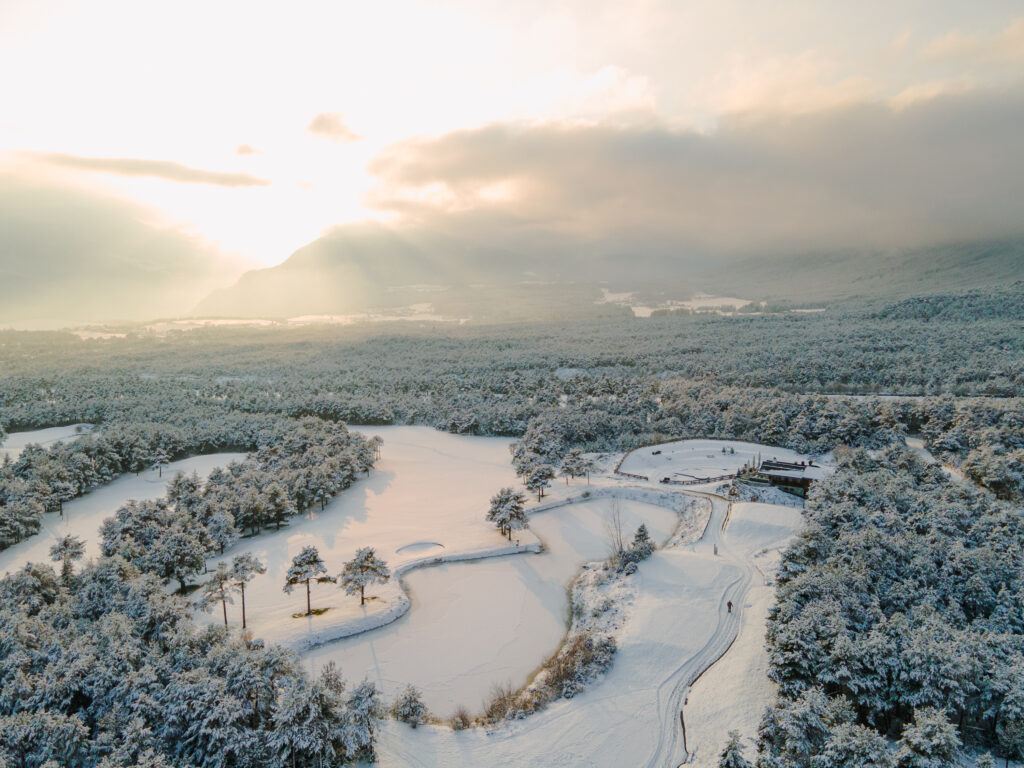
From what altitude can snow cover be realistically expected?
I'll be honest: a Winter wedding in the mountains is damn beautiful, but only when there's actually snow. Nothing is more disappointing than a muddy meadow instead of a glittering snow cover. From my experience, I can tell you: Below 1,200 to 1,500 meters you have no reliable snow guarantee. Of course, sometimes there is snow further down, but that is a matter of luck and should not be the basis for your planning.
If you want a classic winter wedding with a snowy backdrop, ask the venue specifically at what altitude it is located. Also check, what the snow conditions have been like in recent years at your planned time. Most locations can give you honest assessments.
Driving in snow and darkness - don't underestimate it
A snowy mountain road in the dark is something entirely different than during the day in sunshine. I have already seen guests standing in front of snow-covered, winding mountain roads and not being able to get any further. Therefore, ask the location whether the access road is safe to drive on in snow and darkness.
Especially when your guests arrive in the late afternoon or evening, they will be traveling in the dark. Clarify whether the street is being cleared and gritted. Some remote mountain roads are not cleared until the next morning. This is of course a big problem for your wedding. Also ask how quickly clearing services will arrive in an emergency.
Communicate snow chain obligation to guests in good time
Another point that I can't say often enough: If snow chains or four-wheel drive are necessary for the journey, you must communicate this very clearly and in good time to your guests.
Many people have never put on snow chains and also don't know where to get them. It's best to plan Three to four months before your wedding, an update for all guests.
Consider alternatives for guests without the appropriate equipment. Can you organize shuttles with all-terrain vehicles? Is there a meeting point further down where we all start climbing together?
Process, flexibility, and what must be in the contract
Sunset wedding or fixed time slot?
Now we come to the contractual details, which are often overlooked. Discuss thoroughly with the venue, how flexible the timeline can be. Many couples wish for a sunset wedding, but not every mountain location can make that happen. Some have fixed time slots because other events are taking place afterward or because the operating hours of the mountain railway dictate it.
Inquire specifically whether you can adjust the schedule to your wishes or if you must adhere to predetermined slots. That makes a pretty big difference.
Renovation from dining room to dance floor – how does that work?
A point that often only becomes a problem on the wedding day: How quickly can the venue convert from the dinner setup to the dance floor? Do your guests have to leave the room for this and wait somewhere? Is there a second room or a cozy bar where they can stay? This affects the flow of your wedding celebration and should be clarified beforehand.
Clarify volume restrictions and curfews
Especially important for mountain weddings: Are there any restrictions on noise levels or curfews? Some locations are in nature reserves or have other hotel guests who need quiet. Be sure to clarify this before booking so you know, until when you can celebrate and whether your music may need to be turned down.
Review price guarantee and cancellation policy in detail
Make sure you get a clear price guarantee in the contract. Asks how long the mentioned prices are valid and if anything can change due to inflation or seasonal adjustments. The cancellation policies are just as important: What happens if your guest count falls below the required minimum? Do you still have to pay the full amount, or are there goodwill policies?
Payment plan for your wedding weekend
Clarify the payment plan in detail and get written confirmation., when down payments and final payments are due. Also ask if partial payments are possible, if that would be helpful for you.
Frequently Asked Questions About Mountain Weddings
When should I go through this checklist for mountain weddings?
The best way is for you to go through the checklist., before you sign any contract with the venue. Take the checklist for the initial viewing with you and Go over the points directly with the location operator on-site.. Then you know exactly what you're getting into.
What does transportation really cost for a destination wedding in the mountains?
The costs can range from a few hundred euros to several thousand euros, depending on whether the location is accessible by gondola, cable car, or just by shuttle. Night rides or special rides after the party sometimes cost several thousand euros per ride. This may also include shuttle costs from the parking lot to the location if access is not possible for all guests.
Do I need a wedding planner for a mountain wedding?
Honestly, you're Wedding planner makes life significantly easier for a mountain wedding. Especially if you're not from the region, for example, for a wedding in the Alps or in Austria. Logistics for a mountain wedding are considerably more complex like at a classic wedding in the valley.
I know the locations, I know which questions are really important, and I can tell you in advance where things might get critical. Additionally, I have a reliable network of service providers who are used to mountain weddings and know how to handle the demands.
If you want to find out if and how a wedding planner can specifically support you with your mountain wedding, you can Free and non-binding consultation arrange. There we will look at your situation and clarify what support makes sense for you.
How do I find out if a mountain wedding venue is truly exclusive?
Ask directly and have the exclusive use confirmed in writing in the contract.. Many mountain lodges only offer partial exclusivity. Make sure you know exactly what time the venue will be exclusively available for your wedding.
Clarify also whether outdoor areas such as the terrace, meadow, or viewpoints belong exclusively to you or if other guests could be present there during your wedding ceremony.
What happens if our guest count drops below the minimum number?
You should must be thoroughly checked in the cancellation conditions and the contract. Many locations require a minimum number of adult guests or a certain minimum spend for exclusive use. If your guest count drops at short notice due to cancellations, you may still have to pay the full minimum spend.
Conclusion
A wedding in the mountains can be truly beautiful. But for your big day to truly be as you envision it, you should use the checklist for mountain weddings before you sign a contract.
I've compiled these points from my experience with many mountain weddings because I know exactly where the pitfalls lie. It's not about making you feel insecure, but about booking with your eyes open and knowing exactly what you're getting into.
Clarify all questions regarding exclusivity, logistics, transportation costs, and contractual details in advance. This way you avoid unpleasant surprises and can enjoy your wedding relaxed.
Your Ronja
Photographers:
Nicaela Emily Photography, Alpenresort Schwarz, Thorsten Jochim, Manu & Manu